
Wildland Firefighting Training Course
Master the Art of Wildland Firefighting with Miller Timber’s Training Course
Wildland Firefighting
Miller Timber Services, Inc. has met or exceeded NWCG training standards since 1994. The Company’s National Wildfire Suppression Association lead instructor has over 20 years of first-hand wildland firefighting experience. This experience and expertise in the profession have to lead to the development of an exceptional wildland firefighting training program.
Wildland Firefighter Training Course
Preparation
Students will need to complete the following pre-course work online FEMA IS-700, FEMA IS-100 and L-180 Human Factors on the Fireline. Once completed, print certificates and bring them to the first day of training.
Entry-Level Training
All entry-level wildland firefighters complete a 40 hour, 5 day instructional course including:
- Physical Fitness/Pack Test testing
- S-130 – Basic Wildland Firefighting
- S-190 – Introduction to Wildland Fire Behavior
- An 8 hour hands-on field exercise. This hands-on field exercise gives entry-level students the skills and confidence needed to safely perform their assigned job duties. The exercise includes: Portable pump and hose lay use, fire shelter deployment, handline construction, weather observation.
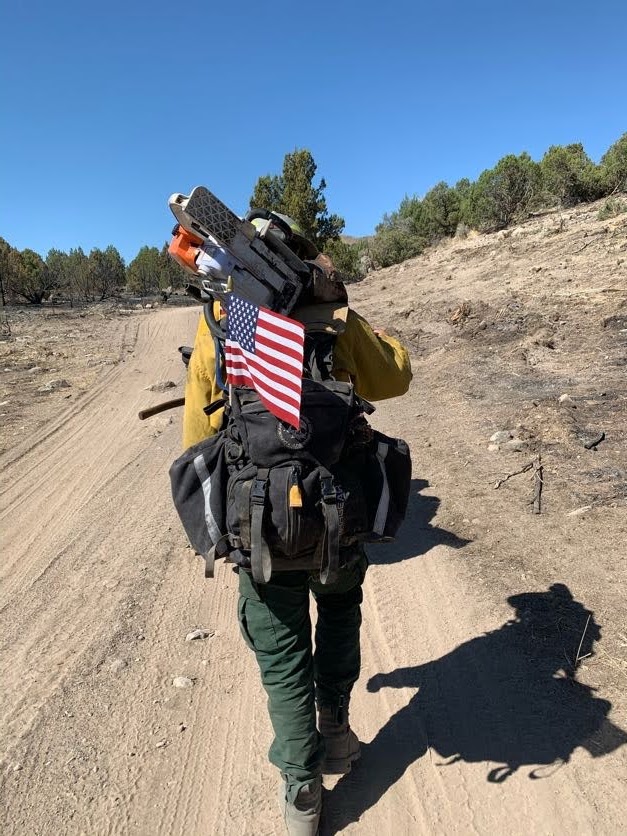
Returning Firefighters
Firefighters with at least one season of experience do not need to take the training course again. Instead, we offer an annual one-day refresher course, RT-130, which must be taken each year.
The Physical Fitness/Pack Test is also required annually for returning firefighters.
IMPORTANT: Annual refresher courses have limited seating, so please contact the course coordinator to register.
Candidates with previous wildland firefighting experience with organizations other than Miller Timber will be evaluated on an individual basis. Qualified firefighters’ records will be reviewed and evaluated to determine relevancy and to verify that training and experience requirements have been met.
Individuals with structural (rather than wildland) firefighting experience should contact the course coordinator to see if their previous training is compatible with Miller Timber Services, Inc.’s training requirements.
Physical Fitness
Wildland firefighting demands a high level of physical fitness to safely perform daylong work in difficult environmental conditions including steep terrain, extreme temperatures, high altitudes, and smoke. For this reason, a physical fitness test is conducted to ensure individual and crew safety.
Pack Test
The Work Capacity Fitness Test, more commonly known as the Pack Test, is a three-mile hike over level terrain carrying a forty-five-pound pack. To qualify, the test must be completed in less than 45 minutes. However, this should be looked at as a minimum fitness threshold. To be successful as a wildland firefighter you should be able to meet this requirement with ease.
1.5 Mile Run
Upon the completion of the Pack Test, crew members will complete a 1.5 mile run (without a pack). Your time will be recorded and factored into your evaluation.
Push-ups and Sit-ups
Crew members will complete a one-minute push-up and one-minute sit-up evaluation. There is no particular threshold necessary to advance, but your performance will still be factored into your evaluation.
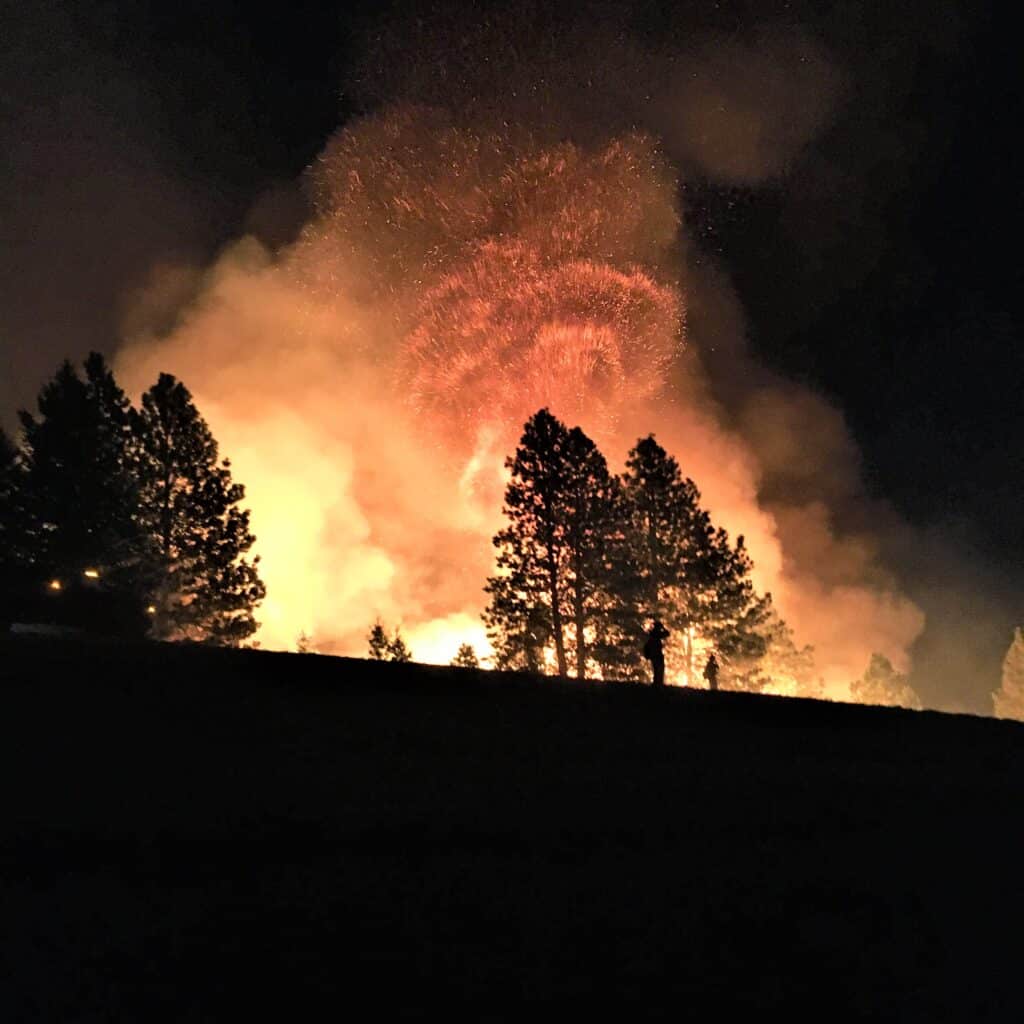
Frequently Asked Questions
Wildland firefighters are hardworking, dependable, self-disciplined individuals who work under difficult and dirty conditions. They like camping, are in excellent physical condition and enjoy working closely with 19 other crewmembers. They aid in the suppression of fires in rural areas by digging fireline, fuels (brush, grass etc.) removal, and laying hoses and may provide assistance for national emergencies.
Wildland firefighting can be a dangerous profession but the risks are minimized by being properly instructed on fire behavior and wearing the appropriate personal protective equipment. All entry-level, first-year firefighters are paired with seasoned wildland firefighters with multiple years of experience to ensure the safety of all crewmembers.
Wildland firefighters must be at least 18 years of age.
Wildland firefighter positions are seasonal, on-call positions. The duration of these positions can be unpredictable based on inconsistent factors such as weather conditions and fuels (grass, brush, etc.) moisture content. Based on the trends of past years, the wildfire season can begin as early as June and end as late as October.
You must have two forms of government issued ID, one of which must have a picture. Student ID cards are not an acceptable form of government picture ID. Driver’s licenses, Social Security Cards and passports are all acceptable forms of government issued ID.
The recommended personal gear for wildland firefighters will be discussed at length during training. You will need to have a good pair of fire boots (Leather work boots, lace-up, 8” high, vibrum soles, non-steel toed), a tent and a sleeping bag. The Company will provide all personal protective equipment required for the position including nomex flame resistant shirts and pants, hard hat, goggles, fire shelter, head lamp, gloves, day pack, and a duffle bag.
Entry-level wildland firefighters can expect to work long hours, averaging 12-14 hours a day (80-100hrs/week). You may be dispatched to wildfire assignments for up to 14 days straight or more if fire conditions necessitate.
The entry-level, basic firefighting training is a weeklong course (5 days). You must attend all of the training in order to receive your red card certification. There is no fee for the training if you intend to work for the Company during the wildfire season.
The pack test, also referred to as the Work Capacity Fitness Test, is a three mile hike over level terrain carrying a 45 pound pack. This test must be completed in less than 45 minutes to ensure individuals are physically capable to perform the minimum tasks required as a wildland firefighter. If the test is not passed you may not proceed with the classroom training. The pack test can be retaken under certain circumstances.
It is preferred that you live within a two hour proximity of Miller Timber Services, Inc., located in Philomath, Oregon. This is due to the urgency of fire dispatch; the Company is required by contract to dispatch a 20-person crew from its host unit in less than two hours. There are, and have been, exceptions to this which can be discussed on an individual basis with the Company.
Miller Timber Services, Inc. has a national and state firefighting contract. This allows us to respond to local fires in Oregon, Washington, Idaho and as far away as Alaska.
Miller Timber Services, Inc. provides transportation to and from the fire location. You may be traveling by truck, van, bus, boat, plane, or even hiking into remote locations. You will be staying in a fire camp in close proximity to the fire.
YES! There is a complex incident command system that establishes the chain of command at every incident. This is a performance based qualifications system that measures an individual’s job performance and experience combined with formal classroom training. Miller Timber Services, Inc. offers advanced training opportunities for those individuals meeting these performance thresholds.